What Six Years of European Design Advocacy Taught Me About Creating Real Impact
By Piotr Swiatek, Design Policy & International Projects Manager, PDR
For much of my professional life, I’ve worked at the intersection of design policy, public sector innovation and design in government. Over the past six years on the BEDA Board, however, I had the opportunity to experience first-hand what international design advocacy actually looks like in practice.
It is rarely defined by big declarations, though those have their place or by single breakthrough moments. More often, it is continuous, often unseen work: meetings, relationships, consultations, translating design into other people’s agendas, and staying in the conversation long enough for opportunities to emerge.
Slowly though, things begin to shift.
Design starts to appear in policies, programmes, legislation and institutions where it simply wasn’t before — from initiatives such as the New European Bauhaus and public sector innovation work at the JRC Policy Lab, to wider conversations around green transformation, skills policy and Horizon Europe research funding.
Building a pathway into design policy
My involvement with BEDA began before joining the Board itself. Through my work at PDR, and with the encouragement of my colleague Professor Anna Whicher — who previously served on the BEDA Board — I became gradually more involved in the European design policy community.
At the time, I was coordinating the Design4Innovation project, which provided an opportunity to support a number of BEDA policy activities. These included the 2018 BEDA / Design4Innovation Insight Forum and workshops that informed the white paper Towards a Next Generation Design Action Plan for Europe (2019).
Looking back, those early conversations shaped much of my subsequent interest in design policy — particularly the relationship between design, government, innovation and competitiveness.

Working within uncertainty
I was elected to the BEDA Board in May 2020, during the first waves of the Covid-19 pandemic, at what was BEDA’s first fully online General Assembly. It was an unusual time to join an international organisation: no travel, limited in-person interaction, and considerable uncertainty about what lay ahead.
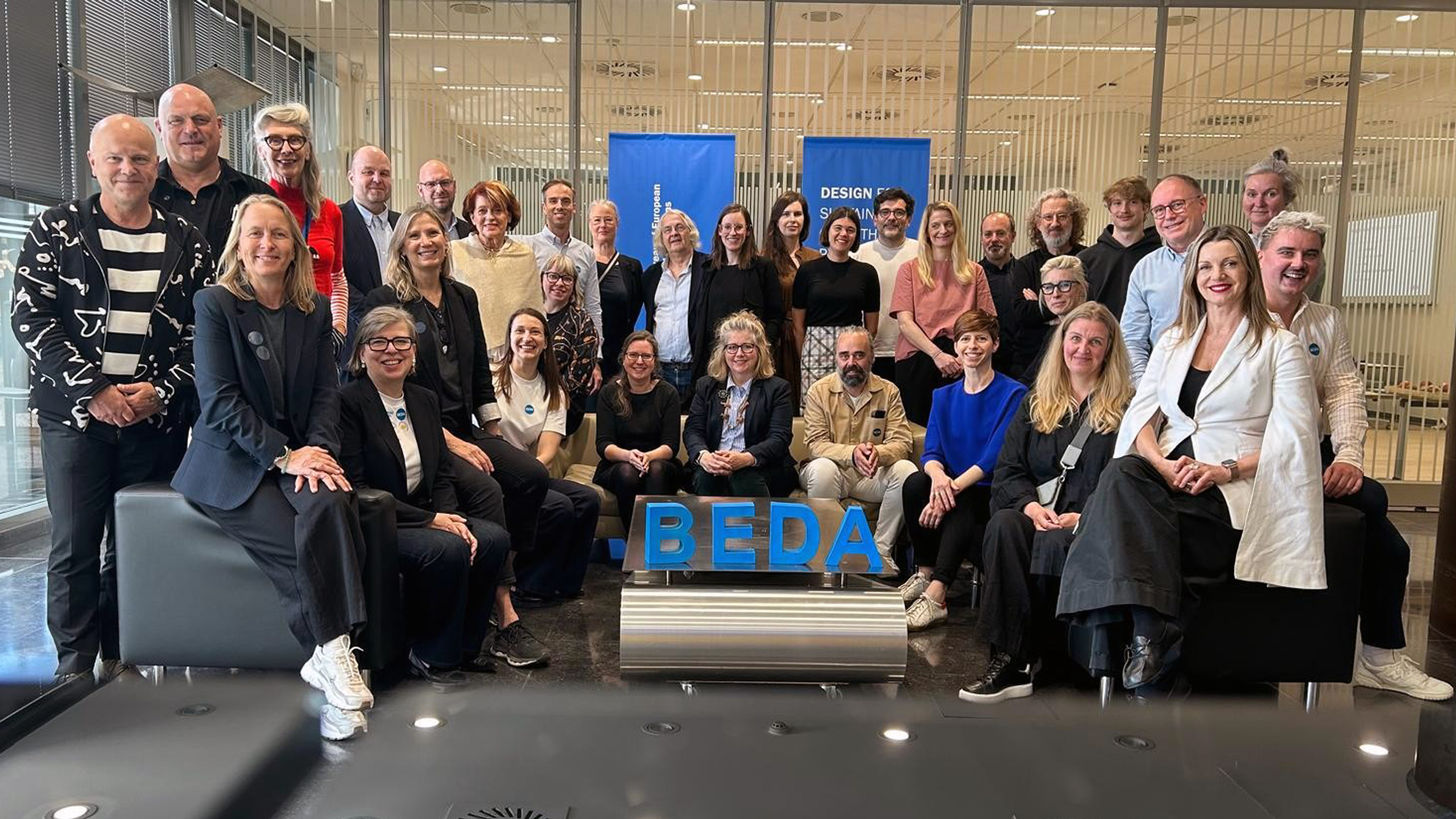
Over three terms — while coordinating the Policy Working Group and serving as Treasurer — I became increasingly involved in BEDA’s engagement with European institutions and the wider international design community.
Much of this work remained largely invisible from the outside. It involved contributing to consultations, drafting position papers, building relationships with policy officers, participating in workshops and conferences, and making the case for design in areas where it was not always fully understood.
A shifting landscape
Collectively, however, the landscape has shifted.
Over recent years, I have seen design become more visible within European innovation and industrial policy conversations. It is increasingly embedded in discussions around sustainability and circularity, and more widely recognised within public sector innovation and policy design.
One particularly rewarding moment was seeing Horizon Europe launch a dedicated call focused on evaluating the impact and value of design in relation to competitiveness and sustainability — something BEDA had advocated for over a long period.
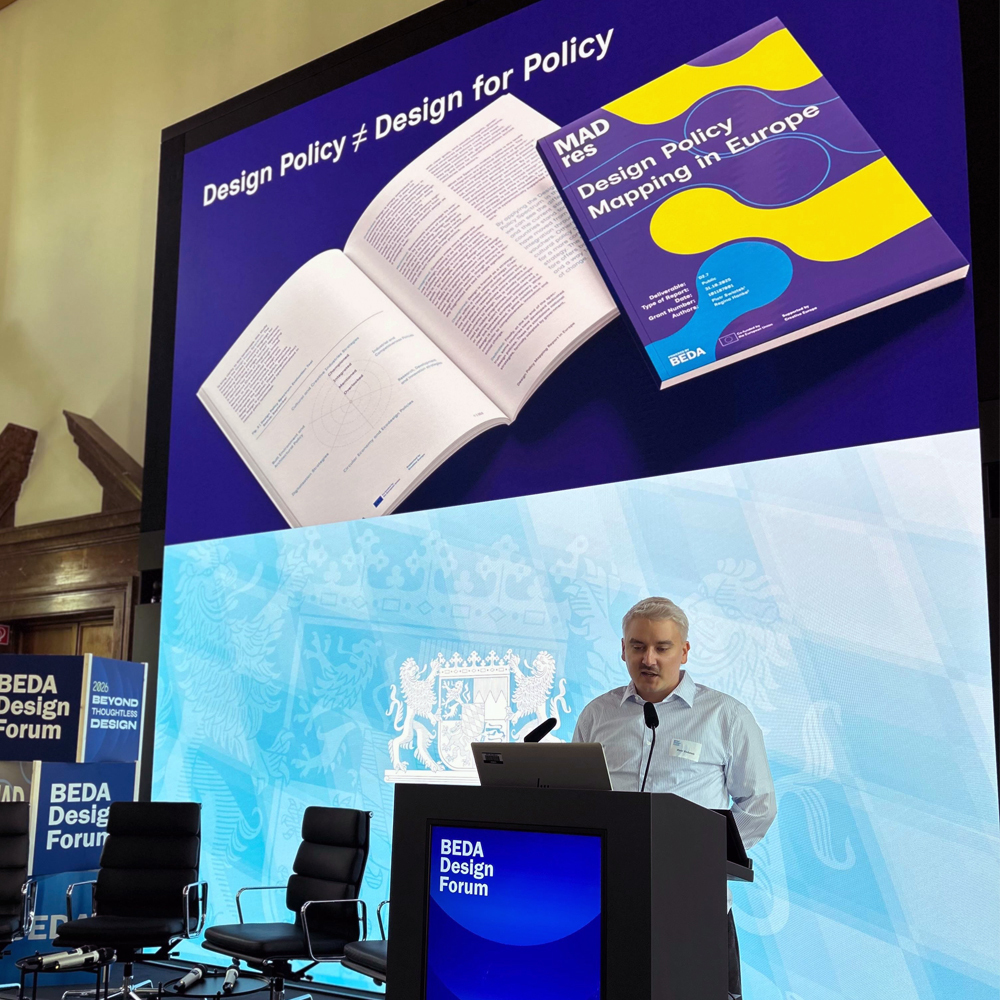
Another highlight was leading the European Design Policy Mapping study. Covering 39 countries and more than 100 policy documents, the research challenged long-standing assumptions within the field.
It also encouraged a different way of thinking about design policy — not as a set of standalone national strategies, but as a broader spectrum of policy inclusion across innovation, industry, sustainability and public sector transformation.
Strengthening the organisation
Alongside this external work, BEDA itself has evolved significantly as an organisation.
It has moved into a more stable financial position, with diversified income streams, stronger project activity and a more sustainable foundation for growth. As Treasurer, I’m proud to have contributed to that transition, helping to support a pragmatic and balanced approach to development.
What design advocacy really takes
Perhaps most importantly, these six years have reinforced something I increasingly believe:
Design advocacy is not primarily about frameworks, declarations or one-off events.
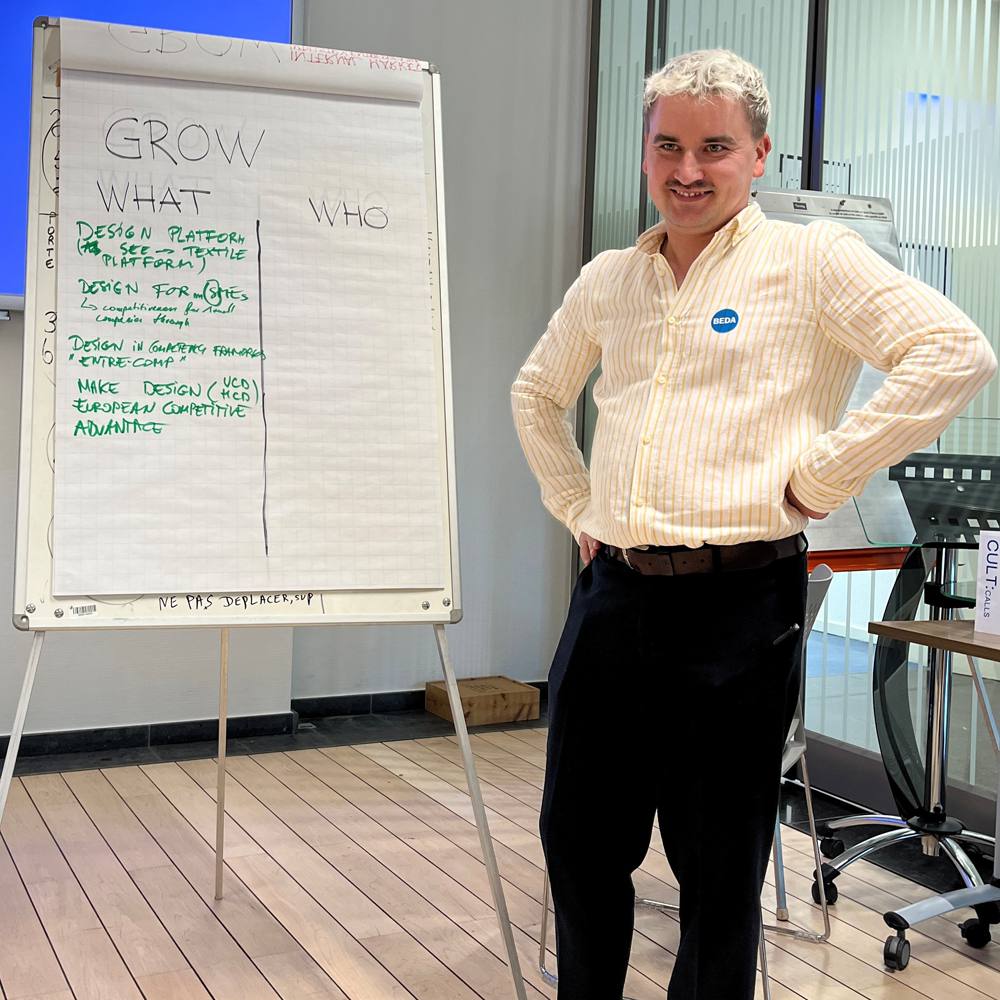
It is continuous, relational work. It is about building understanding, trust and credibility over time — often in spaces where design is not yet fully recognised or understood.
That can, at times, be frustrating. But it is also where meaningful, long-term change happens.
Looking ahead
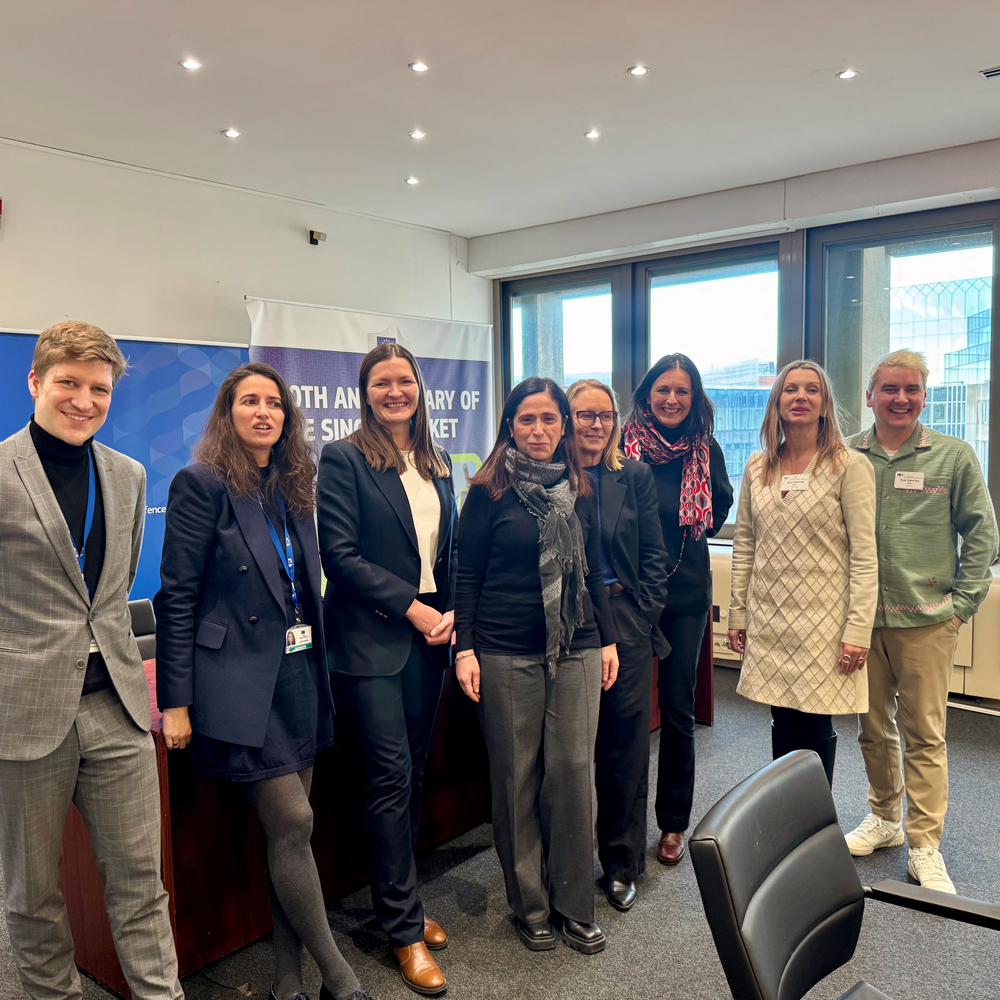
As I step down after three terms on the Board and six years as Treasurer, I feel a strong sense of gratitude — to everyone I’ve worked with across the European and global design community, to PDR for supporting my involvement throughout, and to the colleagues and collaborators continuing to push these conversations forward.
The role of design within policy, innovation and society is still evolving.
But the progress made so far shows what is possible when we commit to staying in the conversation.